

Written By
Oshadha Jayaweera
Digital Marketing Executive
Posting Randomly Is Not a Campaign
A brand can post every day and still achieve very little. That is the hard truth of social media. Activity alone does not create awareness, engagement, trust, or inquiries. A campaign works only when every post, reel, carousel, story, and response is connected to a clear purpose.
The starting point is not “What should we post today?” The better question is “What do we want the audience to understand, feel, and do by the end of this campaign?” That one shift changes the quality of the whole plan.
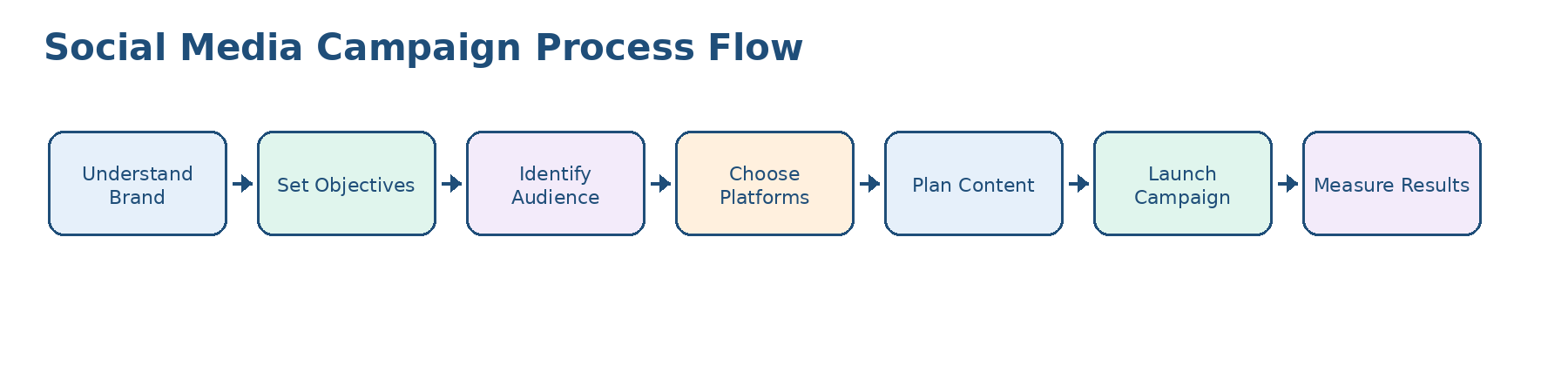
A complete social media campaign moves through a practical flow: understand the brand, set the objective, define the audience, choose the right platforms, build the message, plan the content, launch properly, manage the community, and measure what happened. When this process is followed, social media stops being random content production and becomes a controlled brand-building activity.
What a Social Media Marketing Campaign Really Means
A social media marketing campaign is a planned set of content and engagement activities created to achieve a specific brand objective within a defined period. It is not simply a collection of posts. The posts, videos, captions, stories, and community interactions should work together to communicate one main idea to a specific audience.
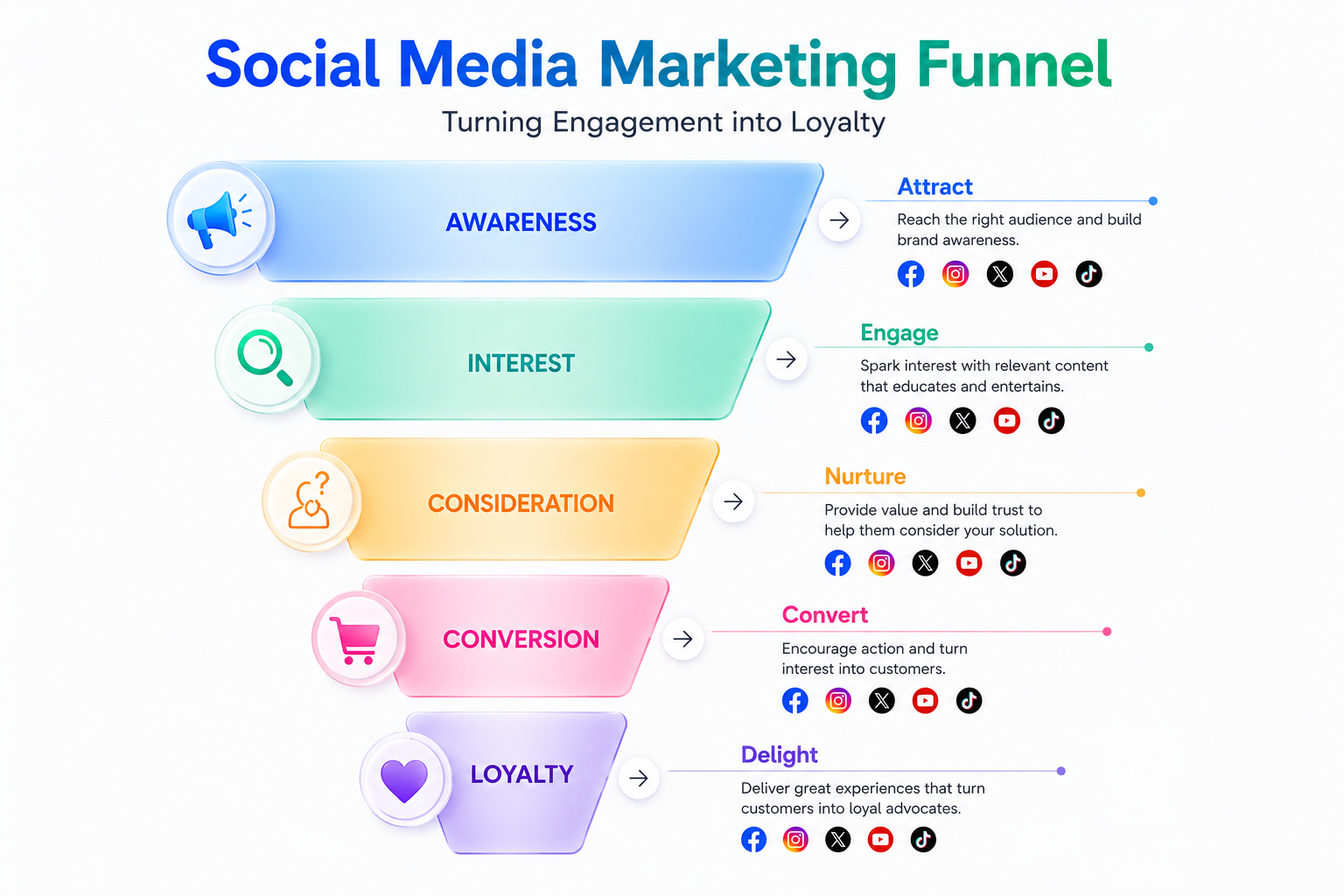
A strong campaign helps a brand create awareness, encourage engagement, build trust, and move people closer to action. That action may be sending an inquiry, visiting a landing page, registering interest, sharing content, saving a post, joining a community, or remembering the brand when they need the product or service later.
The key word is intention. Every piece of content must have a job. Some posts introduce the problem. Some explain the solution. Some show proof. Some create conversation. Some ask the audience to act. When these pieces are planned together, the campaign feels connected instead of random.
Start With the Brand Before You Touch the Content
The first mistake many marketers make is opening Canva or writing captions before they understand the brand. That is backward. If the brand is unclear, the content will also be unclear. Before planning any creative, the marketer should understand what the brand stands for, what it offers, who it competes with, and why people should care.
This does not need to become a long theory exercise. A practical brand review can be done by looking at the brand purpose, products or services, unique selling proposition, competitors, tone of voice, visual style, and current social media performance. The point is to find the brand’s real position before trying to communicate it.
For example, two brands may both sell clothing, but one may be built around premium style while another may focus on affordability and daily comfort. Their campaign direction cannot be the same. The premium brand may need elegant visuals, softer captions, and lifestyle storytelling. The affordable brand may need clearer product benefits, price-related messaging, and more frequent promotional hooks. The product category is similar, but the campaign personality is different.
- Brand purpose and values
- Main products or services
- Unique selling proposition
- Competitors and market position
- Tone of voice and visual identity
- Current social media strengths and weaknesses
Set Campaign Objectives That Can Guide Decisions
Campaign objectives decide the direction of the whole campaign. A vague objective such as “improve social media” is useless because it does not tell the team what to create, which platform to prioritize, or how success should be measured. A better objective gives the campaign a clear target.
Common social media objectives include increasing brand awareness, improving engagement, promoting a new product or service, generating inquiries through social media, driving traffic to a landing page, and building a stronger brand community. The objective should match the brand’s current need. A new brand may focus on reach and awareness. A service-based business may focus on inquiries. A brand with an existing audience may focus on engagement and trust.
The objective also affects content style. If awareness is the goal, short videos, reels, relatable hooks, and shareable content may be important. If inquiries are the goal, content should explain value clearly and include a strong call-to-action. If trust is the goal, testimonials, case stories, behind-the-scenes content, and founder or team-led content may be more useful.
Know Exactly Who the Campaign Is Talking To
A campaign aimed at everyone usually speaks to no one properly. Target audience definition is not just filling in age and location. Those details matter, but the real work is understanding what the audience cares about, what problems they face, what doubts they may have, and what type of content they are likely to stop and watch.
A useful audience profile should include demographics, interests, pain points, online behavior, preferred platforms, and content preferences. For example, university students may respond better to short videos, memes, relatable reels, and simple explainers. Business decision-makers may respond better to LinkedIn posts, proof-based content, case stories, and professional visuals. Small business owners may want practical tips, examples, and clear benefits rather than abstract brand language.
This step should directly influence the campaign message. The question is not “What do we want to say?” The stronger question is, “What does the audience need to hear before they care?” That small shift improves the quality of captions, video scripts, creative headlines, and calls-to-action.
Choose Platforms With a Reason
Posting everywhere is not strategy. It is often just poor planning wearing a busy schedule. Each platform has different audience behavior, content expectations, and creative formats. A brand should choose platforms because they support the campaign objective, not because everyone else is using them.
Instagram is strong for visual storytelling, reels, carousels, lifestyle content, product awareness, and community interaction. Facebook can still work well for local audiences, community groups, events, broader reach, and service updates. LinkedIn is suitable for B2B campaigns, professional services, company credibility, thought leadership, recruitment-related branding, and decision-maker communication. TikTok works well for fast attention, trends, informal storytelling, and high-volume short-form content. YouTube Shorts is useful for quick educational videos, product explainers, campaign teasers, and repeated visibility through short video content.
The same campaign message can be adapted across platforms, but the execution should not be copied blindly. A LinkedIn post may focus on a professional problem and solution. An Instagram Reel may show the same idea visually in a more emotional or lifestyle-driven way. A Facebook post may include more context for a local audience. Platform adaptation is what separates serious campaign planning from lazy reposting.
Build One Clear Campaign Message
A campaign needs one main message that the audience can remember. Without it, the content may look attractive but feel disconnected. The message is the central idea that links the brand’s value with the audience’s need.
A weak message sounds generic: “We provide the best service” or “Buy our product today.” These lines do not explain why the audience should care. A stronger campaign message connects a problem, a benefit, and a reason to act. For example, instead of saying “Use our ride-sharing app,” a stronger message could be “Share your daily route with people heading the same way and make everyday travel more useful.” The second message gives the audience a clearer reason to pay attention.
The campaign message should be simple enough to repeat across captions, videos, carousels, stories, and creative headlines. It should not change every week. The content can change, but the main idea should stay consistent so the audience starts connecting the campaign with the brand.
Turn the Message Into a Content Strategy
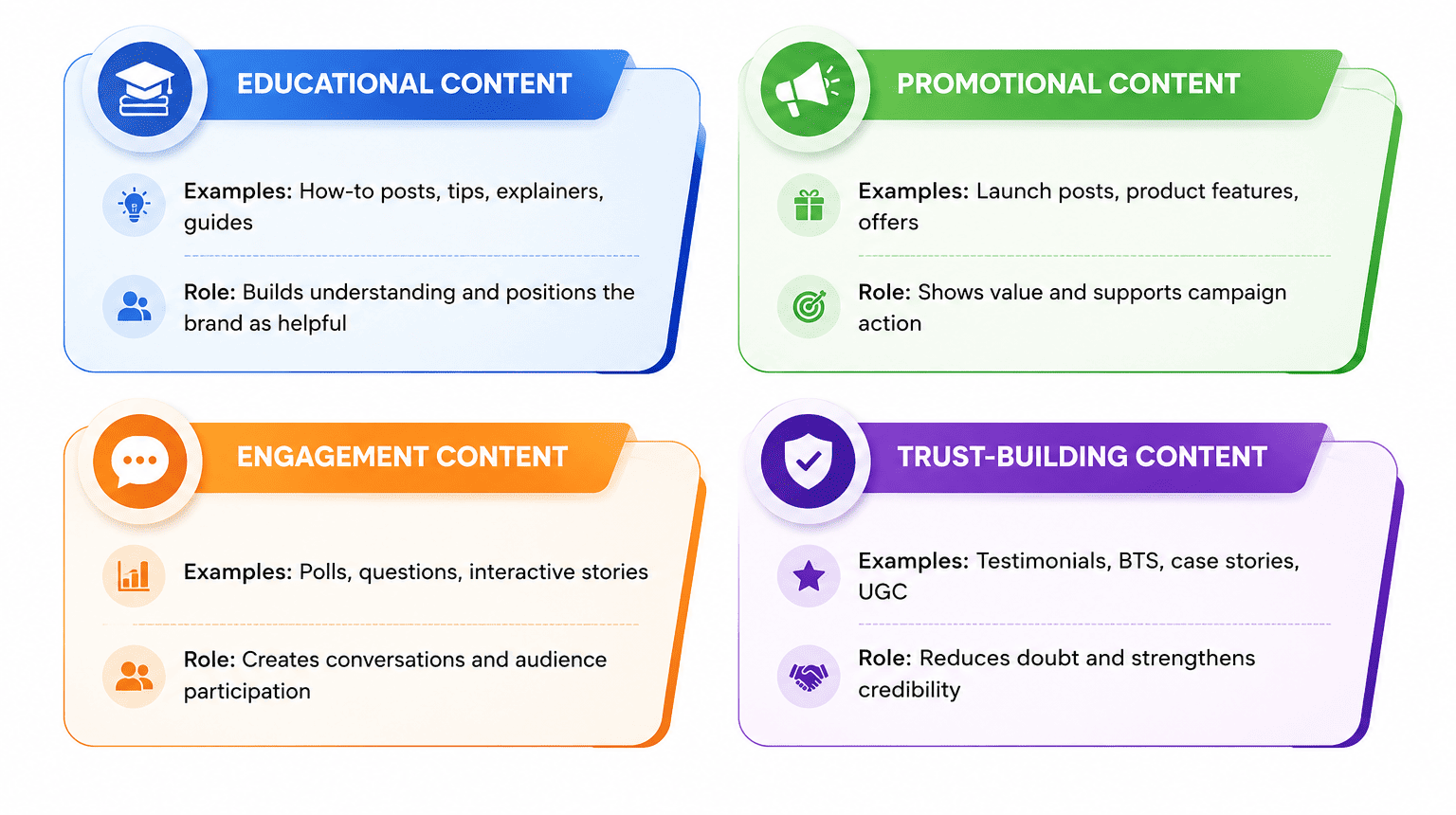
Once the message is clear, the content strategy decides how to communicate it. A balanced campaign should not only promote. If every post says “buy now,” the audience will lose interest quickly. Social media works better when the campaign mixes education, engagement, trust-building, and promotional content.
Educational posts help the audience understand a problem, solution, feature, or process. Reels and short videos are useful for quick attention and emotional connection. Carousel posts are good for explaining steps, comparisons, mistakes, benefits, and useful tips. Testimonials and case stories reduce doubt. Behind-the-scenes content makes the brand feel more human. Product or service explainers help people understand exactly what is being offered. User-generated content creates social proof. Polls, questions, and interactive stories encourage participation instead of one-way communication.
A practical content strategy should answer four questions: What are we trying to make the audience understand? What should they feel? What proof do they need? What action should they take next? If the content answers these questions, the campaign becomes more useful and less decorative.
Contain Strategy Matrix
Use a Calendar to Control Execution
A campaign calendar is not just a posting schedule. It is the control document for execution. It helps the team see what content is going out, when it is going out, which platform it belongs to, what format is needed, who is responsible, and what stage the content is in.
Without a calendar, campaigns become reactive. The team starts rushing creatives, captions are written at the last minute, approvals get delayed, and the campaign loses consistency. A simple four-week calendar can create enough structure for a small or medium campaign.
Sample 4-Week Social Media Campaign Calendar
| Week | Main Focus | Sample Content | Platforms | Purpose |
|---|---|---|---|---|
| Week 1 | Awareness | Brand introduction reel, problem-focused carousel, story poll | Instagram, Facebook, TikTok | Introduce the campaign and attract attention |
| Week 2 | Education | How-it-works video, benefits carousel, short FAQ post | Instagram, LinkedIn, YouTube Shorts | Explain the value and reduce confusion |
| Week 3 | Trust | Testimonial post, behind-the-scenes reel, user story | Instagram, Facebook, LinkedIn | Build credibility and emotional connection |
| Week 4 | Action | Offer/reminder post, inquiry-focused reel, final campaign story sequence | Instagram, Facebook, TikTok | Encourage inquiries, clicks, registrations, or other actions |
Design Creative Assets That People Can Understand Quickly
Creative assets are where the campaign becomes visible. Strong strategy can still fail if the visuals are crowded, the captions are weak, or the call-to-action is hidden. Social media users scroll fast, so the creative must communicate the main idea quickly.
Good social media creatives are clear before they are clever. The headline should be readable. The visual should support the message. The caption should add context instead of repeating the same words on the design. The call-to-action should tell people what to do next, such as comment, save, share, message the page, register, or visit the link.
- Use one main idea per creative. Overloaded posts look amateur.
- Make the first three seconds of reels and short videos strong.
- Keep brand colors, typography, and layout consistent across the campaign.
- Write captions that explain value clearly and end with a relevant call-to-action.
- Adapt sizes and layouts for each platform instead of forcing one design everywhere.
- Use hashtags carefully. They should support discoverability, not make the caption look messy.
Launch, Listen, and Manage the Campaign
Launching the campaign is not the finish line. It is the start of active management. During the campaign, the marketer should monitor engagement, respond to comments, reply to messages, track audience questions, and watch which content formats are performing better.
Community management is often underestimated. A person who comments or sends a message is showing interest. Ignoring that interaction is a wasted opportunity. Quick and helpful responses can turn casual attention into trust. The response style should also match the brand tone. A professional service brand may need a clear and polite tone, while a lifestyle brand may use a warmer and more conversational style.
Campaign management also means adjusting when needed. If reels are getting stronger reach than static posts, the content mix can be shifted. If the audience is asking the same question repeatedly, create a quick FAQ post or story. If a message is not landing, the caption or creative angle may need to be sharpened. A campaign should be planned, but it should not be blind.
Measure What Actually Matters
Performance measurement shows whether the campaign worked. It also prevents the team from making decisions based only on personal opinions. The most useful KPIs depend on the objective. Awareness campaigns should focus on reach, impressions, video views, and follower growth. Engagement campaigns should look at comments, saves, shares, reactions, story interactions, and engagement rate. Inquiry-focused campaigns should track messages, clicks, form submissions, and conversion rate where applicable.
Likes are not useless, but they are not enough. A post with fewer likes but more saves, shares, and inquiries may be more valuable than a post with many likes and no action. Good reporting explains what happened, why it may have happened, and what should be improved in the next campaign.
KPI Measurement Table
| KPI | What It Measures | Why It Matters |
|---|---|---|
| Reach | Number of unique people who saw the content | Shows how far the campaign reached |
| Impressions | Total number of times content was displayed | Helps understand visibility and frequency |
| Engagement Rate | Interactions compared with reach or followers | Shows how strongly the audience responded |
| Follower Growth | Increase in followers during the campaign | Indicates audience growth from campaign activity |
| Clicks | Number of link, profile, or CTA clicks | Shows movement from content to action |
| Saves | How many users saved the post | Shows useful or valuable content |
| Shares | How many users shared the content | Shows content relevance and word-of-mouth potential |
| Comments | Audience replies and conversations | Shows discussion, interest, or questions |
| Leads/Inquiries | Messages, forms, calls, or direct inquiries | Shows business interest generated through social media |
| Conversion Rate | Percentage of users who completed the desired action | Shows how effectively interest turned into action |
Common Mistakes to Avoid
Most campaign failures are not caused by one big problem. They usually come from basic mistakes repeated throughout the campaign. The most common one is posting without a goal. When the objective is missing, the content becomes inconsistent and the report becomes meaningless.
Another mistake is creating content before understanding the audience. A design can look good and still fail if it does not speak to the right problem. Using the same content on every platform is also weak execution. Each platform needs a slightly different approach because people use them differently.
Ignoring comments and messages is one of the worst mistakes. Social media is not a notice board. It is a communication channel. Brands that ignore audience interaction lose trust and miss potential inquiries. Finally, focusing only on likes gives an incomplete picture. A serious campaign review should include reach, engagement quality, saves, shares, clicks, inquiries, and lessons for the next campaign.
- Posting without a clear campaign goal
- Creating content without understanding the audience
- Using the same content on every platform without adaptation
- Ignoring comments, messages, and audience questions
- Focusing only on likes instead of meaningful actions
- Failing to review data and improve future campaigns
What Makes the Campaign Work
A complete social media marketing campaign is built through a clear process, but it should not feel mechanical. It starts with understanding the brand, defining objectives, identifying the audience, choosing the right platforms, building one strong message, planning useful content, preparing a calendar, designing strong creatives, managing the launch, and reviewing performance.
The real value of campaign planning is control. It helps the marketer avoid random posting and make better decisions before, during, and after the campaign. It also helps the brand communicate with more consistency and purpose.
Successful social media campaigns are not created by posting more. They are created by posting with a reason. The best campaigns combine strategy, creativity, consistency, community management, and performance tracking. When those parts work together, social media becomes more than a content channel. It becomes a practical tool for building awareness, trust, engagement, and brand growth.